By Michael “Doc” Studard – Kickin Kountry 101
Before he ever held a microphone under the bright lights of Nashville, Charley Pride was gripping a baseball bat under the Mississippi sun. Born in Sledge, Mississippi, in 1934, Pride’s first dream was to play in the big leagues — and for a while, he did. He spent his early years in the Negro American League, playing for teams like the Memphis Red Sox and Birmingham Black Barons, traveling dusty backroads chasing a dream that looked a lot different than the one destiny had in store.
But music, as it often does, found its way to him. And once that voice broke through the noise, there was no stopping it.
From the Field to the Stage

In those long baseball seasons, Charley’s teammates started noticing something special. Between innings, he’d sing — Hank Williams, Ernest Tubb, Lefty Frizzell — and players would stop what they were doing just to listen. When an arm injury cut his baseball career short, he packed up and headed to Nashville, chasing a dream few believed possible for a Black man in country music.
He was told it couldn’t be done. Then he did it anyway.
His breakout hit, “Just Between You and Me,” in 1966 cracked open the door, and what followed was one of the most remarkable careers in country history. Charley Pride didn’t just make it — he changed it.
A Career Written in Gold
The stats read like a Hall of Famer’s scoreboard:
- 29 #1 hits on the Billboard Country chart
- Three Grammy Awards
- Over 70 million records sold worldwide
- First Black artist inducted into the Country Music Hall of Fame (2000)
From “Is Anybody Goin’ to San Antone” to “Kiss an Angel Good Mornin’,” Pride’s voice became a staple across radios and jukeboxes from the Mississippi Delta to the Canadian plains. His music wasn’t defined by color — it was defined by heart.
Breaking Barriers Without Breaking Spirit
At first, record executives were hesitant to show his photo on album covers, afraid Southern radio wouldn’t play a Black country singer. But once fans heard that voice, it didn’t matter what he looked like. Charley Pride stood tall in a time when the world wasn’t always kind — but he met every moment with grace, humility, and authenticity.
He didn’t demand respect. He earned it.
His charm onstage, that easy smile, and the way he carried himself made him beloved by artists and audiences alike. Pride didn’t just represent possibility — he embodied it.
The Pride of Mississippi
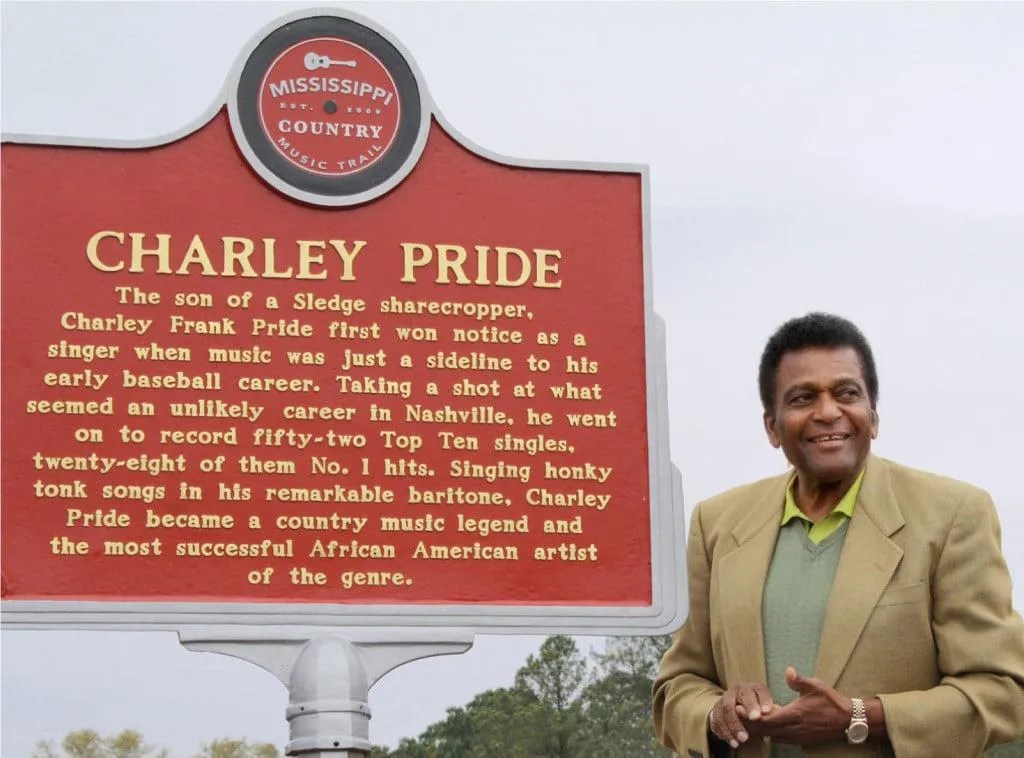
Through every accolade, Charley never lost sight of his roots. He brought Mississippi with him everywhere he went — in his drawl, his stories, and his work ethic. He reminded the world that greatness can rise from the humblest soil.
When he accepted the Willie Nelson Lifetime Achievement Award at the 2020 CMA Awards — just months before his passing — the entire industry rose to its feet. It was more than applause; it was a collective “thank you” for everything he made possible.
A Legacy That Still Echoes
Charley Pride’s voice may have left the airwaves in 2020, but his influence never will. Without him, there might not be a Darius Rucker headlining stadiums or a Mickey Guyton taking the Opry stage. He was the bridge that connected past to future, proof that country music could — and should — belong to everyone.
He was, and always will be, the pride of Mississippi — and the pride of country music.
Final Word
Charley Pride didn’t just change the genre; he changed the definition of it. From the cotton fields to the big leagues, from the Negro League bus to the Grand Ole Opry stage, his life was a testament to grit, grace, and greatness.
So next time “Kiss an Angel Good Mornin’” spins on your radio, take a moment to remember the man who broke barriers with nothing but a bat, a song, and an unshakable belief that he belonged. Charlie will be added to the Country Music Walk of Fame in November.
#CharleyPride #KickinKountry101 #DocStudard #CountryMusicHistory #MississippiLegends #BlackHistoryInCountry #CountryMusicHallOfFame
 Mornings With Doc
Leave a comment