Rest in Space, Ace: A Personal Tribute
I guess I can finally write this. I’ve been waiting until it wasn’t so raw, until my nerves weren’t so exposed. But the death of Ace Frehley has really hit me hard.
I’ve been a member of the KISS Army since I was four years old. My cousin Donnie Hamby—who passed away about ten years ago from pancreatic cancer—introduced me to KISS in 1978 with Dressed to Kill. I was four years old, running around singing Room Service and Two Timer and She, having no clue what the hell those songs were really about. I just knew I loved them. I knew those guys in makeup were something else.
That one record started a lifelong obsession. Dressed to Kill led to Love Gun, Rock and Roll Over, Destroyer, Dynasty, the solo albums, Unmasked—all of it. It led me down a road where KISS became a part of my identity. It was like being in a gang. We were the KISS Army. We recognized each other by the uniform: the KISS belt buckle, the KISS radio, the shirts, the posters. If I had back every dollar I ever spent on KISS, I’d be as rich as Gene Simmons.
As a drummer, I idolized Peter Criss. His jazz background gave KISS its backbone—that swing and that soul underneath all that bombast. But I knew the sound of KISS came from somewhere else. Let’s be honest: Gene’s bass didn’t define KISS. Paul’s rhythm guitar didn’t define KISS. Peter was the backbone, sure—but the engine that drove the KISS machine was Ace Frehley.
Paul was the voice. Gene was the fire and the showman. But Ace? Ace was the soul. That Les Paul slung low, the smoke pouring from it, the riffs that felt like they were cut from the same dirt and electricity that birthed rock and roll itself. He didn’t play with his hands. He played with his guts. From the bottom of his soul, from the back of the bar, from the edge of space. That was Ace.
When Ace and Peter left, I thought it was over. But then Eric Carr came along—a dear friend of mine and one of the most genuine souls to ever walk this planet. I miss Eric immensely. After Vinnie Vincent came and went, Mark St. John briefly stepped in, but his demons got the best of him. Bob Kulick didn’t join, but his brother Bruce did—and Bruce was phenomenal, a player who helped KISS evolve in the ’80s. Bruce was different from Ace: more precision, more technique, but every bit as vital to that era.
Still, for me, it ended when they let Eric Singer and Tommy Thayer put on the makeup. That was it. KISS died the moment they tried to fake the magic that Ace and Peter brought. You can’t bottle lightning and you can’t re-cast legends.
Eric Singer’s a prick, plain and simple. If they wanted to put something on his face, it should’ve been a dick instead of cat whiskers. The man even had a restraining order against me once—and that’s because he’s a big, gaping coward who couldn’t take the truth. Tommy Thayer? Nobody’s top guitarist, nobody’s hero. He’s just the guy who kissed enough of Gene and Paul’s ass to land the gig. Nobody’s sitting around going, “Man, we gotta get Tommy Thayer on this record.”
KISS should’ve evolved. They should’ve moved forward. Instead, Gene and Paul tried to recreate ghosts. They couldn’t let go. And that’s when it stopped being KISS and started being a tribute band wearing someone else’s skin.
But this—this isn’t about bitterness. It’s about gratitude. Because Ace Frehley was one of the greatest guitar players who ever lived. He was lightning in a Les Paul. The raw, sloppy, beautiful imperfection that made rock and roll what it’s supposed to be: dangerous, exciting, and alive.
And energy like that doesn’t die. It just changes form. The energy that made up Ace—the spark that lit his riffs, that smile, that laugh—is out there now, floating in the ozone, making this world a better place just by still existing in it.
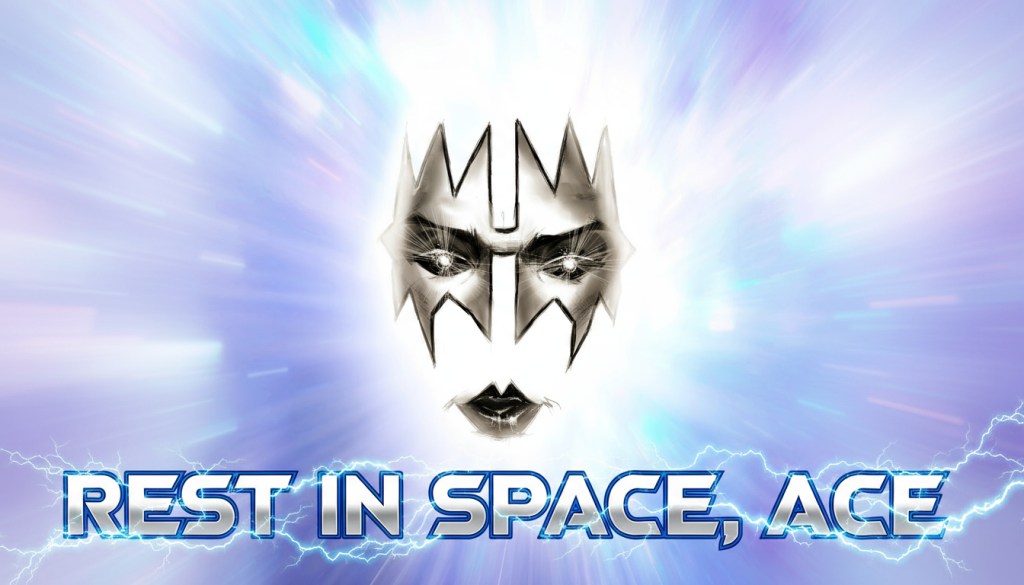
So rest in space, Spaceman.
We love you. We miss you.
And like you always said—
“Ack!”
 Mornings With Doc
Leave a comment